Adopting a Dog: The Essential Shopping Checklist
Updated : November 13, 2026
Before adopting a dog, have at least a collar with an ID tag, a leash and a harness, two bowls, a bed, a few sturdy chew toys, poop bags, an enzymatic cleaner and a small bag of the food the dog already eats. A crate or playpen is very useful but not mandatory. Everything else (winter coat, advanced puzzle toys, extra grooming gear) can wait until you know your dog better. Shelters and recognized organizations such as the American Animal Hospital Association (AAHA) and Humane World for Animals give much the same starter list.
Here is the full checklist, ranked by priority, with tips for choosing each item and getting your home ready.
Day-one essentials
These are the items to have before you bring the dog home.
Collar, tag and identification
Humane World for Animals recommends a flat buckle collar or a martingale collar, with an ID tag that shows your phone number. In Quebec, your dog must also be registered with your municipality and wear the tag issued at registration at all times, according to the Quebec government. Check with your town as soon as you adopt.
To fit a collar properly, you should be able to slide two fingers between the collar and the neck. If your dog is not microchipped yet, ask about it at the first vet visit.
Leash and harness
A fixed nylon leash about 6 feet (1.8 m) long is the basic choice recommended by Humane World for Animals. It also fits the Quebec rule: in public places, the leash can be no longer than 1.85 m, and a dog weighing 20 kg or more must wear a harness or head collar attached to the leash. Skip the retractable leash at first, since it gives you little control over a dog discovering a new neighbourhood. To compare options, read our guide Which leash is best for my dog, and if your new companion pulls hard, see our article on the best harness for a dog that pulls.
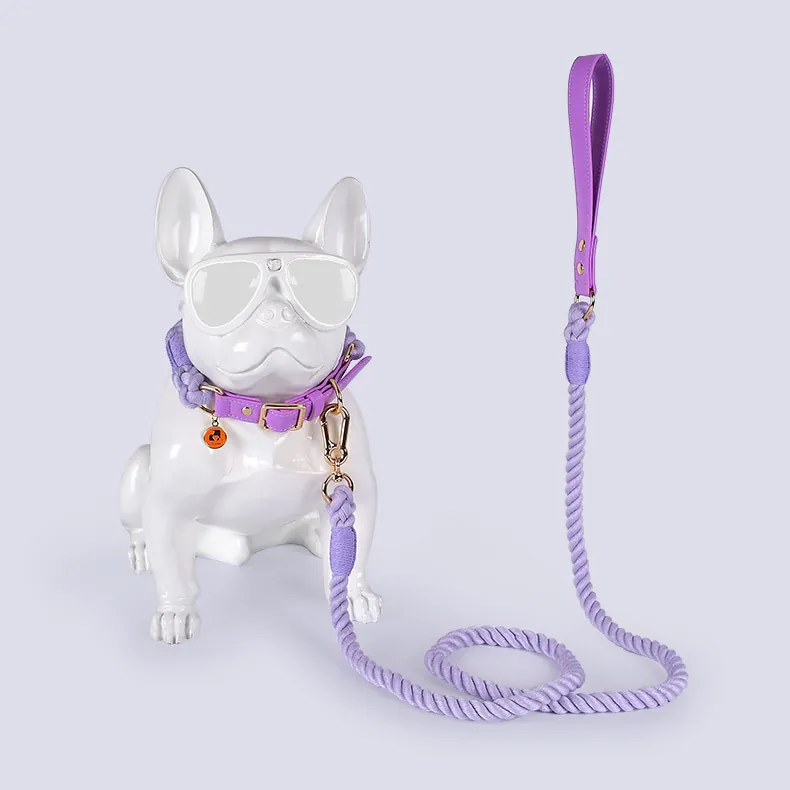 Our pickRope collar and leash setMatching collar and leash, ready for the first walkfrom $31.99See the product ›Sponsored
Food and water bowls
The AAHA recommends stainless steel bowls: they are sturdy, do not hold odours and are easy to wash. Get one for water and one for food. If your dog gulps meals, a slow feeder bowl can help (see our guide My dog eats too fast).
The food your dog already eats
Ask the shelter or foster family which food the dog gets and buy a small bag. Humane World for Animals advises making any switch to a new food gradually, mixing old and new, to avoid an upset stomach.
A bed and a quiet corner
The AAHA stresses the importance of a calm, safe space away from household traffic where the dog can retreat. A washable bed is enough to start. The American Kennel Club (AKC) notes that some dogs love soft bolster beds while others prefer a firmer surface or a simple blanket, so expect some trial and error.
Poop bags
Essential for every walk. A dispenser that clips to the leash means you never forget them.
Our picks
Three well-rated items from recognized brands to get off to a good start with an adopted dog.
Very useful in the first week
A crate or playpen
A crate is not a cage in the punishment sense: introduced well, it becomes a den. Humane World for Animals says it should be large enough for the dog to stand, turn around and sit normally. The AAHA reminds owners it should never be used as punishment. It is mostly for transport, short periods when you cannot supervise and house training. Introduce it with the door open, with treats and a toy, and never force the dog inside.
A gate
A gate keeps the dog out of certain rooms while it learns the house rules. The AKC suggests starting with a small area and expanding it gradually. Our guide Dog gates for the house explains how to choose the right height and mounting type.
Sturdy toys
Humane World for Animals recommends toys the dog cannot swallow and advises avoiding rawhide. Until you know whether your dog shreds its toys, supervise play. A food-stuffed toy given when you leave also helps the dog stay calm alone (see How to keep a dog busy when home alone). Rotate toys to keep them interesting.
An enzymatic cleaner
Even a house-trained dog can have accidents in a new home. Humane World for Animals suggests assuming the dog is not house-trained at first and taking it out every few hours. An enzymatic cleaner breaks down the molecules that cause odour, so the dog is less likely to return to the same spot. All the details are in our guide How to remove dog or cat urine smell.
Basic grooming tools
A brush suited to the coat, nail clippers and a dog toothbrush are enough to begin. The AKC recommends getting dogs used to tooth brushing early. For the coat, our guide Best brush for a dog that sheds will help you choose.
What can wait
It is tempting to buy everything at once, but several items are easier to choose once you know the dog:
- A winter coat: it depends on your dog's size, coat and tolerance for cold.
- More advanced puzzle toys: wait to see whether your dog likes sniffing, chewing or tugging.
- A second bed for another room or the car.
- A car seat cover, if you travel with your dog often.
Getting the house ready
The AAHA and the AKC recommend going around the house at dog height:
- put medications, cleaning products and food out of reach;
- hide or protect electrical cords;
- remove toxic plants and small objects that could be swallowed;
- use garbage cans with lids.
Hold a family meeting before the adoption, too. The AAHA suggests deciding together who feeds the dog, who walks it, where it sleeps and whether it is allowed on the couch. Clear rules from day one help the dog learn faster.
The first days: keep it calm
Humane World for Animals suggests bringing the dog home on a weekend or during a few days off. In the first week, keep a steady routine: meals, walks, departures and returns at the same times. Avoid dog parks, busy pet stores and lots of visitors. The AAHA notes that it is common for an adopted dog to hide a little or eat less at first, and that an adult dog often needs weeks, not days, before being left alone for long.
Book a vet appointment within the first week for a general check-up, as both the AAHA and Humane World for Animals recommend. Bring the papers the shelter gave you. To find one near you, see our veterinarian pages.
Finally, be patient. According to Humane World for Animals, adjustment can take days, months or longer, especially for a dog that has lived in several homes. If problems come up, the shelter or a certified trainer can help (see our training and behaviour listings).
Frequently asked questions
How long before the dog arrives should I shop?
Ideally a few days before, so you have time to set up the dog's corner and check the house. On arrival day you will want to be available for your dog, not at the store.
Do I need a crate for an adopted adult dog?
It is not mandatory, but it is often useful for transport and as a retreat. It should let the dog stand, turn around and sit, and it should never be used as punishment.
Do I have to register my dog with the city?
Yes. In Quebec, registering your dog with the municipality is mandatory, and the dog must wear the tag issued at that time. Your municipality will tell you the steps and deadlines.
Can I change the food as soon as the dog arrives?
It is better to wait and keep the same food at first. If you switch, do it gradually by mixing old and new, and ask your veterinarian for advice.
Sources
- New dog checklist: Your step-by-step guide to a successful start, AAHA
- How to bring your new dog home and make them feel welcome, Humane World for Animals
- New Puppy Checklist: Gear You'll Need for Your New Dog, American Kennel Club
- Rules and obligations for dog owners, Government of Quebec
Find a service near you
Shelters & adoption Pet food & supply stores Veterinarian Search by city