The Best Harness for a Dog That Pulls on the Leash
Updated : November 9, 2026
For a dog that pulls on the leash, the most useful harness is a front-clip harness, often sold as "no-pull": the leash attaches at the chest, so when the dog pulls it is gently turned back toward you instead of moving forward. A harness alone will not solve the problem, though. It gives you more control while you teach your dog to walk on a loose leash.
Here are the types of harnesses, how to choose the right size and fit, and the method the American Kennel Club recommends to make walks enjoyable again.
Collar or harness?
A collar is still useful to carry your dog's ID tag. For walking a dog that pulls, many owners prefer a harness, which spreads pressure across the chest and shoulders instead of the neck. This matters most for small dogs, short-nosed breeds and dogs that cough when they pull. Ask your vet if your dog has breathing or back problems.
Our picks
Well-known, highly rated harnesses. Measure your dog before ordering and check the manufacturer's size chart.
Types of harnesses
The American Kennel Club (AKC) describes several designs:
- Front-clip: the ring sits on the chest. It turns the dog toward you when it pulls and can discourage pulling. It is the first choice for a dog that pulls.
- Back-clip: the ring sits between the shoulder blades. The leash is easy to attach and the dog is very comfortable, but it can pull with its full weight. The AKC suggests it for well-trained dogs.
- Dual-clip: rings at the front and back. Start with the front clip for control, then switch to the back once your dog walks well. A great choice for young dogs.
- Step-in: the dog steps into the harness with its front legs and you fasten it on the back. Nothing goes over the head, which suits dogs sensitive around the ears or neck.
- Tightening no-pull harness: it tightens slightly when the dog pulls. The AKC suggests it for dogs stronger than their walker, people pushing a stroller and people with mobility issues.
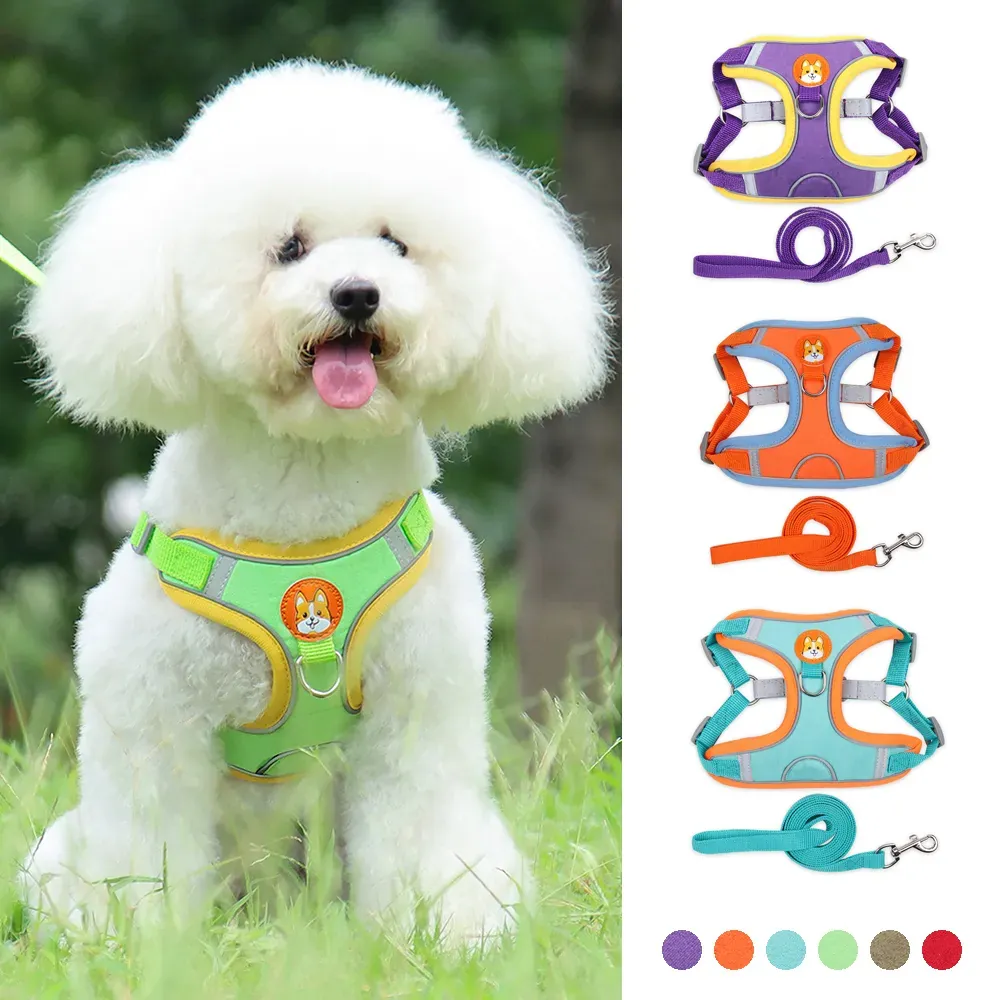 Our pickHarness and matching leashHarness with a matching 1.5 m leashfrom $21.00See the product ›Sponsored
How to measure
The AKC recommends two measurements:
1. The neck, at its base where it meets the shoulders.
2. The chest, at its widest point just behind the front legs.
Use a cloth measuring tape, or a string you then measure against a ruler. Compare with the manufacturer's size chart; sizes vary a lot between brands. Between two sizes, choose the one with the most adjustment room, especially for a growing puppy.
Fitting the harness
A poorly fitted harness can rub, restrict movement or let the dog slip out. The AKC's advice:
- Start loose, then tighten each strap gradually.
- Slide two fingers under the straps: they should fit comfortably.
- Walk your dog around: its shoulders and legs should move freely.
- Pull gently in several directions and have your dog back up: the harness must not slip over its head.
- Check often for rubbing or redness, especially under the front legs.
- Readjust after grooming, after a weight change and as a puppy grows.
The method to stop pulling
The harness helps, but training is what really changes walks. The AKC suggests a simple reward-based method:
1. Stop as soon as the leash goes tight. Stand still. Your dog learns that pulling does not get it anywhere.
2. Move on only when the leash is loose and your dog looks back at you. Reward right away with a treat or kind word.
3. Reward often at first, then gradually replace treats with "life rewards" such as sniffing a post or greeting a dog friend.
4. Be consistent: if you let your dog pull when you are in a hurry, it learns pulling sometimes works. For quick outings, let it relieve itself in the yard and save training for when you have time.
5. Walk at a brisk pace: a slightly faster rhythm keeps your dog focused.
6. Keep sessions short and calm, especially at first.
Expect to stop often in the first days. With consistency, most dogs catch on within a few weeks.
Mistakes to avoid
- Yanking the leash: it can hurt and often makes dogs more anxious.
- Using a retractable leash during training: it rewards pulling, since the dog gains length by pulling.
- Switching harnesses constantly: give your dog time to get used to one.
- Skipping exercise: an under-exercised dog pulls more. Play, dog park time and puzzle toys help.
When to get help
If your dog pulls so hard it is unsafe, lunges at dogs or people, or you fear losing it on walks, a trainer who uses positive reinforcement can help quickly. See our dog training listings to find one near you.
Frequently asked questions
Does a front-clip harness hurt the dog?
Not when it fits well. It turns the dog toward you when it pulls. Check that it does not rub under the legs or restrict the shoulders.
Can my dog wear its harness all day?
It is better to remove it at home, especially when unsupervised, so it cannot snag and the skin can breathe.
How long until my dog stops pulling?
It depends on the dog and on your consistency. Many dogs improve within a few weeks if "leash tight, we stop" is applied on every walk.
Which harness for a puppy?
An adjustable dual-clip harness is a good choice: it grows a little with the puppy and lets you move from front to back clip.
Sources
- Best Dog Harnesses: Types, Fit Tips, and Safety Guide, American Kennel Club
- How to Stop Your Dog From Pulling on the Leash, American Kennel Club
- Dog Harnesses and Dog Collars: Which Is Right For Your Dog?, American Kennel Club
- Collar vs. harness, VCA Animal Hospitals
Find a service near you
Trainers & behaviorists Pet food & supply stores Search by city