My Dog Eats Too Fast: How to Choose a Slow Feeder Bowl
Updated : November 10, 2026
If your dog eats too fast, the simplest fix is a slow feeder bowl: a bowl with ridges or a maze that makes your dog work for each small mouthful. You can also split the daily ration into two or three meals, use a food-dispensing toy or spread kibble on a baking sheet. The American Kennel Club (AKC) and VCA Animal Hospitals both recommend these methods to make mealtime longer and calmer.
Here is how to tell if your dog is a gulper, which solutions work, how to choose the right bowl and how to help your dog get used to it.
How do I know my dog eats too fast?
There is no official stopwatch, but a few signs are hard to miss:
- the bowl is empty in under a minute, often before you have put the food bag away;
- your dog swallows without chewing, head buried in the bowl;
- they cough, gag a little or bring food back up shortly after eating;
- they push the bowl all over the kitchen;
- they rush over to check the other dog's bowl.
According to the AKC, gulping food can lead to choking, vomiting and discomfort, partly because dogs swallow air along with their food. VCA adds that dogs who wolf down their meals often seem like they never feel full. Slowing things down makes mealtime more pleasant for everyone.
Our picks
Three products from well-known brands, highly rated by buyers, to slow down mealtime.
Why some dogs eat so fast
Several things can explain the habit:
- Competition: in a home with several pets, a dog eats fast so nobody steals their share.
- Their past: a rescued dog who once went hungry may keep the habit of swallowing everything right away.
- Breed and personality: some dogs are simply very food motivated.
- Meal format: one big meal a day means a very hungry dog diving into the bowl.
Knowing the cause helps you pick the right fix. If it is competition, separate the pets first. If it is pure enthusiasm, a bowl or a game usually does the trick.
Solutions that work
The slow feeder bowl
This is the most popular option. The bottom of the bowl is covered with bumps, spirals or a maze. Your dog has to work around the obstacles with nose and tongue, turning a few seconds of vacuuming into a few minutes of searching. The AKC suggests reading other buyers' reviews to find a model that worked for a dog like yours.
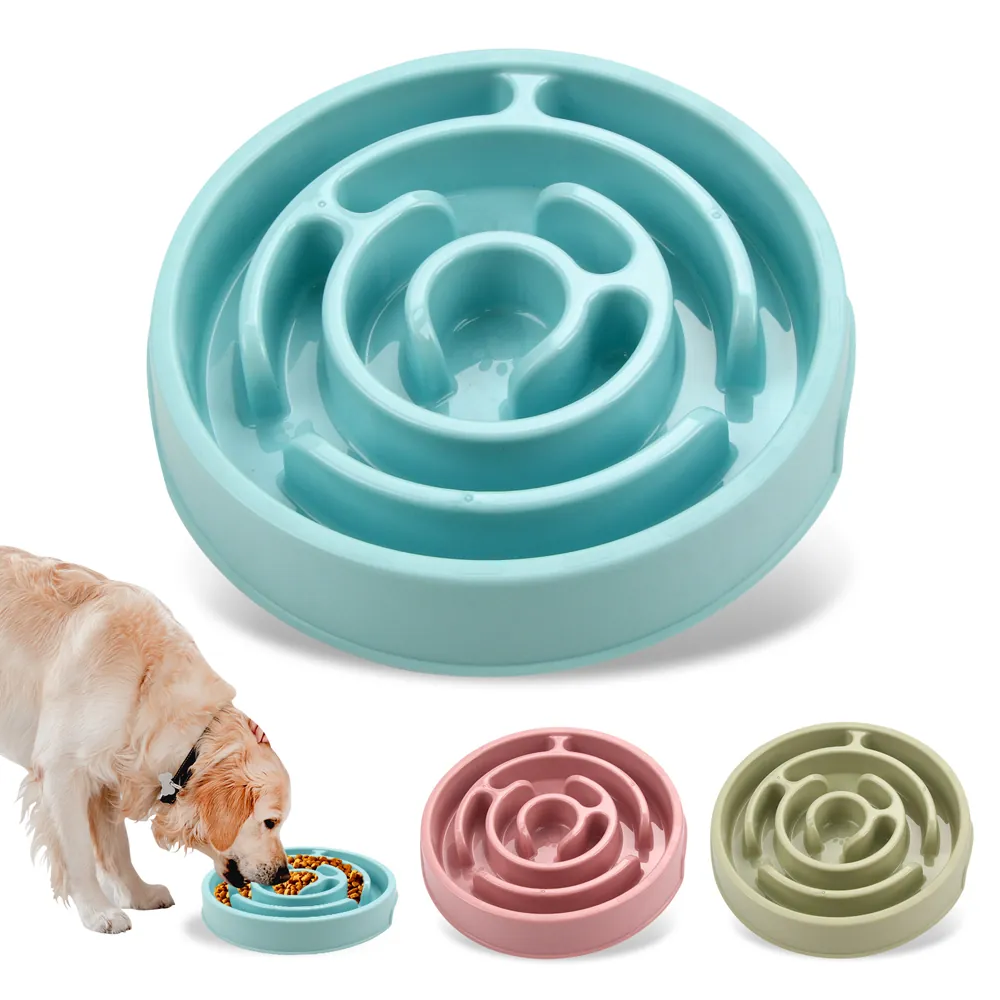 Our pickMaze slow-feeder bowlA maze that makes the meal last longerfrom $16.99See the product ›Sponsored
Food-dispensing toys and puzzles
A toy you fill with kibble that releases pieces one at a time as your dog rolls it. Flat puzzles with compartments to open or slide also make your dog think. VCA points out that these games stretch out mealtime and provide mental stimulation. They are a great choice for a dog who spends part of the day alone (see our article on keeping a dog busy home alone).
Free tricks at home
You do not need to buy anything to start:
- Muffin tin: a small portion in each cup. Both the AKC and VCA suggest it.
- Baking sheet: spread kibble in a single layer so your dog has to pick up pieces one by one.
- Bowl inside a bowl: the AKC suggests turning your regular bowl upside down inside a larger bowl and pouring the food into the gap.
- Kibble hunt: VCA suggests hiding small portions around the house or yard so your dog finds them by scent.
- Training meal: use part of the daily ration as rewards during a short obedience or trick session.
Several smaller meals
The AKC and VCA both recommend dividing the daily amount into two or three meals instead of one large one. Your dog arrives less hungry and rushes less. Ask your veterinarian how much your dog should eat in total, then split it up.
Feed pets apart
If you have several dogs, or a dog and a cat, feed them in different rooms or where they cannot see each other. Without pressure, many dogs slow down on their own. Pick up bowls as soon as the meal is over.
How to choose a slow feeder bowl
Obstacle size and depth
This matters most. A small, flat-faced dog (bulldog, pug, shih tzu) needs low, widely spaced ridges or they will give up. A large dog with a long muzzle (shepherd, Labrador) can handle deeper, tighter patterns. Brands often list a difficulty level: start with an easy one.
Capacity
Make sure a full meal fits without overflowing. Many models come in mini, regular and large sizes.
Material
- BPA-free plastic: light, affordable and available in many shapes. Choose a sturdy, dishwasher-safe model and replace it when it gets scratched or chewed.
- Stainless steel: very durable and easy to clean, but with simpler patterns.
- Ceramic: heavy and stable, but breakable.
- Silicone: soft and handy for travel, but some dogs chew it.
Stability
A fast eater pushes the bowl around. A non-slip rubber base or a heavy bowl keeps dinner from turning into a chase. A silicone mat underneath also helps.
Cleaning
Grooves collect wet food and saliva. A dishwasher-safe bowl makes life easier; otherwise, a small bottle brush works. Wash it after every wet meal, and at least daily for kibble.
Helping your dog adjust
Most dogs figure it out within a meal or two, but some get frustrated. To make it go smoothly:
1. Start easy: put a few kibbles on top of the ridges so your dog wins right away.
2. Mix methods: half the meal in the old bowl, half in the new one, for a few days.
3. Stay nearby and encourage calmly, without emptying the bowl for them.
4. Watch for frustration: if your dog paws, barks at or chews the bowl, switch to an easier model.
5. Rotate: alternate the bowl, a muffin tin and a food toy to keep things interesting, as VCA suggests.
For wet food, pick a model with wide ridges that is easier to clean, or freeze the portion inside a Kong-type toy for an even longer meal.
Frequently asked questions
How long should it take a dog to eat?
There is no standard. If the bowl is empty in under a minute and your dog swallows without chewing, it is worth slowing things down. The goal is a calm meal that lasts a few minutes.
Is a slow feeder OK for a puppy?
Yes, if the ridges are low and easy. It can even build good habits early. Avoid small removable parts a puppy could chew.
What about a cat that eats too fast?
The idea is the same. There are flatter slow feeders made for cats, plus kibble toys. Read our article on automatic cat feeders.
My dog still brings food back up with the bowl. What now?
Talk to your veterinarian. Repeated regurgitation can have causes other than speed, and only a professional can tell the difference.
Sources
- How to Help Your Dog Eat More Slowly, American Kennel Club
- Feeding a Dog Who is a Glutton, VCA Animal Hospitals
- My Dog Eats Too Fast and Vomits Often, American Kennel Club
Find a service near you
Pet food & supply stores Trainers & behaviorists Veterinarian Search by city