How to Protect Your Couch From Pet Hair and Claws
Updated : November 14, 2026
To protect your couch from pet hair and claws, the most effective approach is to combine three things: a washable cover or throw where your pet lies, regular brushing to reduce hair at the source, and an appealing alternative (a bed of its own for the dog, a sturdy scratching post right next to the couch for the cat). The rest comes down to good cleaning tools.
Here is how to choose the right protection, cut down on hair, discourage scratching and keep your sofa looking good, whether or not your pet is allowed on it.
First, decide on the rule
Before buying anything, decide whether your pet is allowed on the couch. Both choices are fine, but the protection is different.
- Allowed: you protect its favourite spot with a cover or throw, and you manage the hair.
- Not allowed: you offer a better spot elsewhere and make the couch less appealing while it learns.
According to the American Kennel Club (AKC), dogs love the couch because it is comfortable, warm, often near a window, and smells like their people. Knowing why your dog climbs up helps you pick the right fix. A dog that climbs up to watch the street, for example, will be less tempted if you close the curtains.
Our picks
Here are three popular, well-rated products that cover the three needs: protecting, cleaning and discouraging scratching.
Throw, cover or protector: which one?
A throw or blanket
This is the simplest and cheapest solution. The AKC suggests covering the couch with a large throw your pet can lounge and shed on, then lifting it off when guests arrive. Choose a machine-washable fabric large enough to cover the seat and back. The downside: it slides and bunches when your pet jumps on it.
A pet sofa protector
This is a quilted cover for the seat, back and armrests, designed for pets. The best models have a non-slip back to stay in place, a reversible fabric and often a water-resistant layer, handy for wet spring paws or Quebec winter snow. Measure your couch (seat width between the armrests) before buying: a protector that is too small leaves the corners exposed.
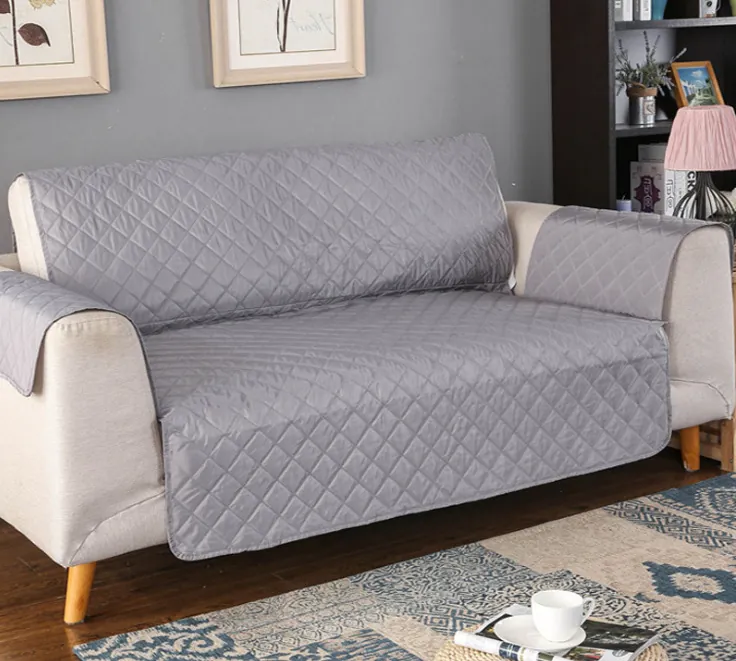 Our pickReversible quilted sofa coverKeeps fur off the sofafrom $27.99See the product ›Sponsored
A fitted slipcover
It covers the whole couch like a garment. It looks the neatest, but it is harder to put on and take off. It works well if your pet uses the whole couch, not just one spot.
Which fabric holds up best?
If you are shopping for a new couch, hair clings less to smooth, tightly woven fabrics. The AKC notes that hair does not embed in leather, which wipes clean with a microfibre cloth, though leather does mark under claws. Looped or loosely woven fabrics are ideal targets for cat claws: avoid them if you have a scratcher.
Less hair on the couch: tackle it at the source
Even the best cover will not solve everything if your pet sheds a lot. VCA Animal Hospitals point out that regular brushing reduces the hair and dander that end up around the house.
- Brush your dog at least once a week, more often during spring and fall shedding. The AKC recommends a slicker brush, in the direction of hair growth, to remove dead undercoat before it lands on the furniture.
- Brush your cat according to coat length: a long-haired cat needs it much more often than a short-haired one, especially during shedding season.
- Professional grooming helps a lot with double-coated dogs. A groomer can remove a large amount of undercoat in one session. Find one in our grooming section or, at home, among mobile groomers.
To choose the right brush, see our guide on the best brush for a dog that sheds and, for the reluctant cat, how to brush a cat that hates being brushed.
Removing the hair that is already there
VCA and the AKC suggest several simple methods. Test on a small hidden area first, since not every fabric reacts the same way.
1. Vacuum first, with a small attachment or a handheld vacuum, into cushions and crevices, before hair gets embedded.
2. A slightly damp rubber glove or rubber squeegee: wiped over fabric, it gathers hair into little clumps that are easy to pick up.
3. A light mist of water mixed with a little fabric softener helps loosen hair before vacuuming, according to VCA.
4. A lint roller for quick touch-ups. Reusable rollers save you from buying sticky refills.
5. Leather: a simple microfibre cloth does the job.
Covers and throws go in the washer. VCA suggests tumbling them in the dryer with dryer balls or a dryer sheet, and emptying the lint trap after each load. An anti-static spray can also keep hair from sticking. Our guide to the best vacuum for pet hair will help you pick a machine.
Claws: mostly a cat thing
Scratching is natural and necessary for cats. International Cat Care is clear: never punish a cat for scratching, since it can increase stress and make the problem worse. The answer is to offer something better than the couch, and to make the couch less appealing while habits change.
- Place a scratching post right next to the damaged spot, and near where your cat sleeps, since cats often scratch after waking up.
- Pick one tall enough for a full stretch, with a texture similar to what your cat likes to scratch.
- One post per cat, plus one, in a multi-cat home, recommends International Cat Care.
- Temporarily cover the target area: International Cat Care suggests a thick blanket or one-sided sticky plastic film. Clear anti-scratch guards on corners and armrests do exactly that.
- Trim claws regularly: short claws do less damage.
Our article My cat scratches the couch: what to do? walks through the training step by step.
With dogs, claws mostly cause damage when they jump or dig at the cushions before lying down. Well-trimmed nails and a quilted protector handle most cases. See how to trim your dog's nails.
Give your pet a better spot
Whether or not your pet is allowed on the couch, a spot of its own reduces wear. The AKC recommends giving your dog its own bed, ideally in the room with the most tempting furniture, with a blanket, towel and chew toy. If it climbs back on the couch, calmly lead it back and reward it. Teaching a "go to your place" cue helps a lot.
For cats, a cat tree near a window offers the height and view they often look for on the back of the couch. See our guide on how to choose a cat tree.
The small routine that makes a difference
- Shake out or vacuum the cover a few times a week.
- Wash the cover or throw every week or two, more often in spring when paws are muddy.
- Wipe paws at the door after a walk in the rain or slush.
- Own two covers: one on the couch, one in the wash.
Frequently asked questions
Do cat deterrent sprays work on the couch?
Sometimes, but only alongside a well-placed scratching post. Without an alternative, the cat will scratch somewhere else. Always test a product on a hidden part of the fabric.
What is the best couch fabric for pet owners?
A smooth, tightly woven fabric holds less hair and resists claws better than a looped one. Leather does not hold hair, but it does mark under claws.
How do I stop the cover from sliding?
Choose a model with a non-slip back, tuck the flaps deep between the cushions and the back, or add straps. A protector in the right size slides much less.
My dog digs at the cushions before lying down. Is that normal?
Yes, many dogs circle and scratch before lying down to make a nest. A quilted protector and well-trimmed nails limit the damage.
Sources
- How to Pet-Proof Your Home, American Kennel Club
- How to Remove Dog Hair From Everything, American Kennel Club
- Why Dogs Jump on Furniture and How to Stop It, American Kennel Club
- Tips to get pet fur off clothes and upholstery, VCA Animal Hospitals
- Scratching on furniture and carpets, International Cat Care
Find a service near you
Pet grooming salon Mobile pet groomer Pet food & supply stores Search by city