My Cat Is Scratching the Couch: What Can I Do?
Updated : November 10, 2026
If your cat is scratching the couch, do not try to stop the scratching itself: give your cat a better place to scratch, set right next to the couch, and make the couch less appealing for a few weeks. Scratching is a natural feline need, not bad behaviour, and punishment often makes things worse.
Here is why cats scratch, how to choose a scratcher your cat will actually use, where to put it, how to protect your furniture during the transition and what to know about claws in Quebec.
Why does my cat scratch the furniture?
According to International Cat Care and VCA Animal Hospitals, scratching does several jobs:
- Claw care: scratching removes the worn outer layer of the claws.
- Stretching: it is a full workout for the front legs, shoulders and back.
- Marking territory: the paw pads have scent glands, and the visible marks add a message for other cats.
- Reassurance: an anxious cat may scratch more. International Cat Care notes that scratching all over the house, especially near doors and windows, can be a sign of insecurity.
The couch has everything a cat wants: it is sturdy, it does not move, its fabric grips claws well and it sits at the centre of family life. That is exactly what a scratcher needs to copy.
The most common mistakes
- A scratcher that is too small or wobbles: International Cat Care and the ASPCA stress a sturdy post with a heavy base, tall enough for a full stretch on the hind legs. An adult cat that had a kitten-sized post needs a bigger one.
- A scratcher hidden in a corner: VCA recommends putting it where the family spends time, not in an unused room.
- Punishing the cat: yelling, spraying or tapping does not remove the need to scratch. Your cat may learn to fear you and scratch when you are away. International Cat Care advises against any punishment.
- Forcing the paws onto the post: the ASPCA and International Cat Care advise against it; the cat links the post with something unpleasant.
- Throwing out the worn post: it is often the one your cat prefers, because it carries its scent.
Step 1: choose the right scratcher
Every cat has preferences. The ASPCA suggests watching what your cat already scratches:
- Scratches the back or sides of the couch while standing: it prefers vertical scratching. It needs a tall, stable post, or a scratcher fixed to a wall or corner.
- Scratches the rug or the bottom of the couch: it likes horizontal scratching. A scratching mat or flat cardboard scratcher will work better.
- Texture: sisal, corrugated cardboard, wood and looped carpet are the most common. Kittens and senior cats often like softer, angled cardboard.
In multi-cat homes, International Cat Care recommends one scratcher per cat, plus one, in different locations.
Step 2: put it in the right place
This is the most important step. Place the new scratcher right against the part of the couch your cat attacks. VCA advises moving it gradually to its final spot once the habit has formed. Add another near your cat's favourite nap spot: cats often scratch when they wake up.
Step 3: make the scratcher irresistible
- Play around it: drag a feather wand around and over the post so the claws catch on it.
- Reward every use with a treat, a pat or praise.
- Catnip attracts some cats; it does not work for all of them.
- Scratch it yourself with your fingertips to show what it is for.
Step 4: make the couch less appealing, for now
While your cat learns, protect the areas already damaged. The ASPCA suggests covering them with plastic, double-sided tape or an upside-down vinyl runner. International Cat Care also suggests a thick blanket or one-sided sticky film. Clear anti-scratch furniture sheets go on the corners and sides of the couch and come off later. Once your cat uses the scratcher reliably, remove the protection gradually.
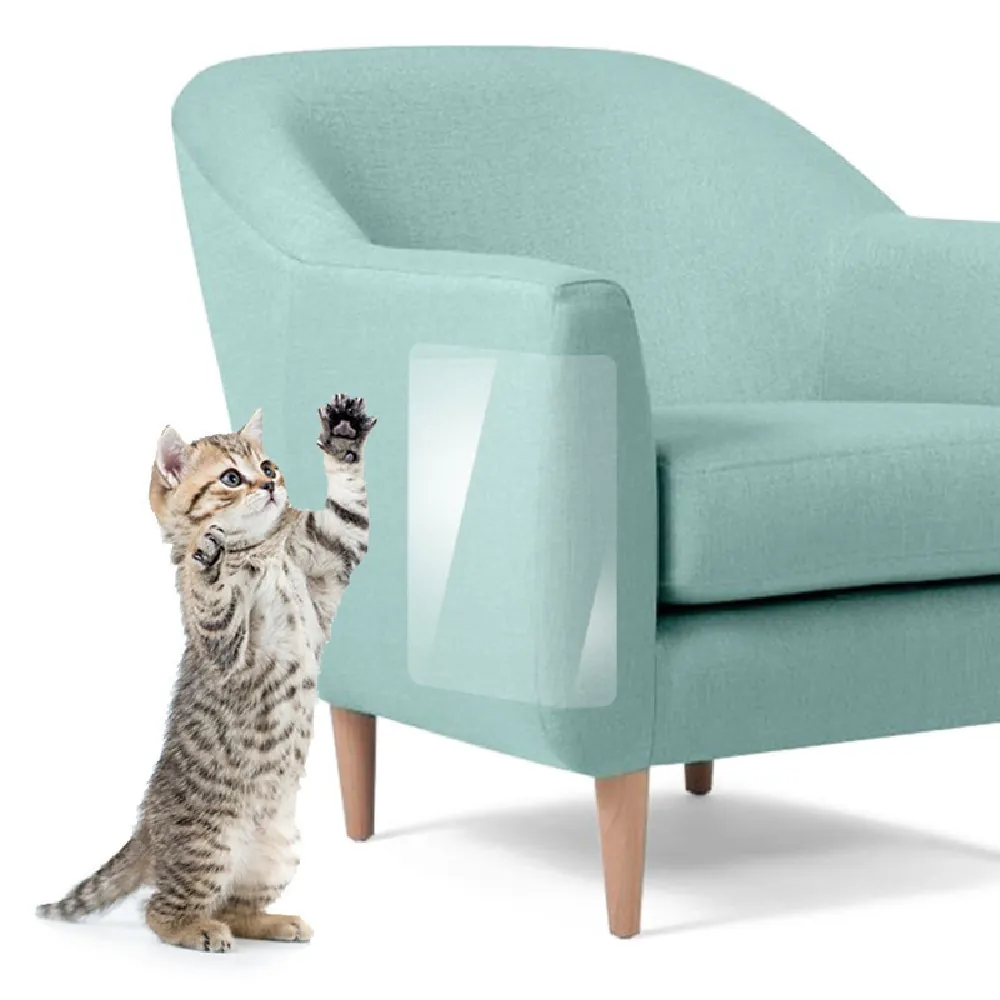 Our pickClear anti-scratch furniture sheetsProtects couch corners while your cat learnsfrom $14.99See the product ›Sponsored
Step 5: look after the claws
Trimming the claw tips regularly limits damage, but International Cat Care points out that trimming does not replace the need to scratch. If you are unsure how, ask your clinic or a groomer for a demonstration. Senior cats scratch less effectively and may need more frequent trims: overgrown claws can snag or grow into the pads. Very thick claws can point to a health issue, so mention them to your veterinarian.
The ASPCA also mentions glued-on nail caps, which are temporary and last about four to six weeks. Ask your veterinarian before trying them.
What about declawing?
In Quebec, the question is settled: since February 10, 2024, the regulation of the Ministère de l'Agriculture, des Pêcheries et de l'Alimentation (MAPAQ) prohibits declawing cats, as well as other surgeries that stop a cat from using its claws normally. The only exception is a medical reason concerning the cat itself, set by a veterinarian. The ASPCA also opposes declawing, which has not been shown to fix behaviour problems. The answer is a good scratcher.
Solutions that work
For most cats attacking the side of the couch, the winning combination is simple: a tall, stable vertical scratcher placed against the couch, and anti-scratch sheets on the damaged area for a few weeks.
- For the cat that scratches standing up: a post about 80 cm tall with a heavy base, or a sisal wall-corner scratcher that attaches to the corner of a wall or piece of furniture and does not move.
- For the cat that scratches the rug or the bottom of the couch: a sisal scratching mat on the floor, or a cardboard accordion scratcher lounge it can also nap on.
- To protect the couch while it learns: clear anti-scratch sheets on the targeted corners.
- For claw care: a nail clipper made for cats, used calmly, a few claws at a time.
Which one to choose?
- Cat that stretches full-length against the backrest: tall, stable post or corner scratcher.
- Cat that scratches the rug, stairs or bottom of the couch: scratching mat or cardboard scratcher.
- Kitten or senior cat: softer, angled cardboard.
- Couch already damaged: add anti-scratch sheets while the habit changes.
Frequently asked questions
How long does it take for a cat to stop scratching the couch?
It varies. With a well-placed scratcher and rewards, many cats change their habits within a few weeks. Keep the couch protected until the new habit is solid.
Is a spray bottle a good idea?
No. The ASPCA describes it as a last resort because your cat may come to fear you, and International Cat Care advises against any punishment. Focus on redirection and rewards.
Why does my cat ignore its scratcher?
It may be too small, unstable, in the wrong spot or the wrong texture. Try another style (vertical or horizontal, sisal or cardboard) and place it against the furniture your cat already scratches.
Should I trim my cat's claws?
Regular trims limit damage but do not replace a scratcher. Ask your veterinarian to show you how to avoid the living part of the claw.
My cat suddenly scratches everywhere. Is that normal?
A sudden change can be linked to stress, a move or a new animal. If it continues or comes with other changes, see a veterinarian.
Sources
- Scratching on furniture and carpets, International Cat Care
- Destructive Scratching, ASPCA
- Why cats scratch furniture (and how to stop it!), VCA Animal Hospitals
- MAPAQ information sheet for veterinarians (PDF, French)
If you have any doubt about your cat's behaviour or health, talk to your veterinarian.