How to Keep Your Dog Busy Indoors When It's Too Cold
Updated : November 18, 2026
When it is too cold for a long walk, you can keep your dog busy indoors with games that make it move and think: hide-and-seek, treat searches, fetch in a hallway, tug-of-war and short trick-training sessions. Fifteen to twenty minutes of nose work often tires a dog as much as a walk, and these activities work in an apartment as well as a house.
Why it matters in winter
In Quebec, days of deep cold, freezing rain or storms often cut walks short. A dog that burns less energy can become restless, bark more, chew things or demand your attention constantly. The problem is not only physical: a dog also needs to keep its mind busy.
The BC SPCA notes that indoor games work both the body and the mind, and the American Kennel Club (AKC) suggests using winter to practise obedience and teach new tricks at home. Keeping a few short outings for bathroom breaks is still essential; indoor games add to them, they do not replace them.
Nose games: the best effort-to-tiredness ratio
Your dog's nose is its favourite tool. Having it search for something keeps it focused and tires it out without needing much space.
The treat hunt. Ask your dog to sit, place a few pieces of its regular food in plain sight around a room, then say "find it." Once it understands, hide them behind a chair leg, under a cushion or in a corner. Make it harder little by little.
The snuffle toy. A fabric toy full of folds, where you tuck kibble, makes your dog dig with its nose. It is a good calm activity at the end of the day.
The cup game. Put a treat under one of three upside-down cups and let your dog find the right one. Stay close so it does not chew the cups.
For these games, use part of your dog's daily ration instead of extra treats, so it does not end up eating too much overall.
Hide-and-seek with you
The BC SPCA recommends hide-and-seek, which works both body and nose. Start simple: ask your dog to stay (or have someone hold it), hide in another room, then call its name. Reward it enthusiastically when it finds you. Over time, choose harder hiding spots: it will learn to find you by scent. It is also a great way to practise recall.
Games that get your dog moving
Hallway fetch. The AKC suggests playing ball in a long hallway. Throw gently, on a floor where your dog does not slip, and move fragile items out of the way. A rug or non-slip runner helps a lot on hardwood floors.
Tug-of-war. A good game for dogs that love to pull, as long as you keep rules: you start and end the game, and your dog lets go of the toy on cue. If its teeth touch your hand, the game stops for a few seconds.
The flirt pole. The BC SPCA also mentions the flirt pole, a pole with a rope and a toy on the end that you move so your dog chases it. It is intense: a few minutes are enough, in a room with enough space.
The obstacle course. The AKC suggests moving a few chairs or small tables to create a course and practise heeling between obstacles. A cushion to step over, a tunnel made from a blanket over two chairs: be creative, but keep jumps very low, especially for a puppy or senior dog.
Learning tricks: 10 minutes that change the day
A few short training sessions work your dog's focus. The AKC suggests reviewing the basics (sit, down, stay, come) and learning simple tricks: shake a paw, speak on cue, get into a box, jump through a hoop. Keep sessions to 5 to 10 minutes, always positive, and end on a success. If you are new to this, Clicker Training a Puppy: How to Get Started explains an easy method.
A sample week in deep cold
You do not need to do everything every day. A simple example:
- Morning: a short bathroom outing, then breakfast served in a snuffle toy.
- Noon: 10 minutes of hide-and-seek or a treat hunt.
- Late afternoon: 5 minutes of tug or hallway fetch, then 5 minutes of tricks.
- Evening: a calm activity, like a chew toy or a lick mat.
Vary the games from one day to the next and put toys away between sessions: a toy that comes back after a few days feels new.
When home is not enough
If your dog is very energetic, a doggy daycare or an indoor class (agility, scent work, obedience) can help it get through winter. The BC SPCA specifically suggests indoor agility or scent work classes. See training and behaviour services near you. And for short outings in the cold, our article Does My Dog Need a Coat in Winter? can help you choose.
Toys that make cold days easier
A few well-chosen toys make these games easier:
- A snuffle toy to serve part of a meal and work the nose.
- A snuffle ball you fill with kibble for your dog to dig into and roll around.
- A rope with a ball for tug-of-war and fetch.
- A squeaky plush toy for play-driven dogs, great for hide-and-seek with a toy.
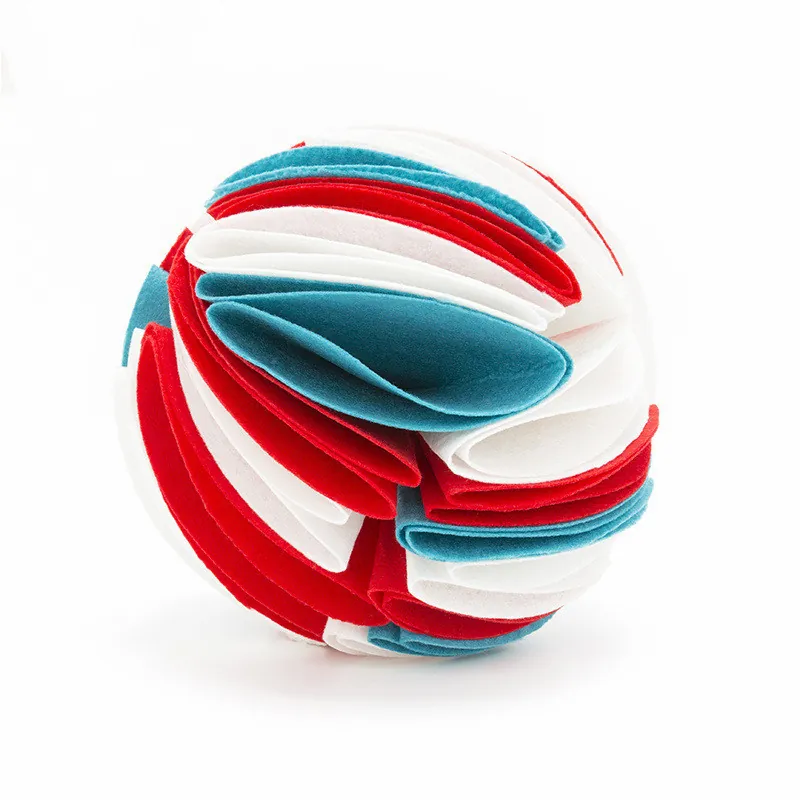 Our pickSnuffle ballA ball you fill with kibble for your dog to dig into and roll, for a calm activityfrom $16.99See the product ›Sponsored
Which one to choose?
For a dog that needs to settle down, start with the snuffle toy or snuffle ball: they keep it busy for a long time without overexciting it. For an energetic dog that loves to run and pull, the rope with a ball is more useful. The squeaky plush appeals to playful dogs, but watch those that destroy everything and remove it as soon as it tears.
Frequently asked questions
How long should I play with my dog indoors?
It depends on age, breed and energy level. For many dogs, 15 to 30 minutes of active play and nose work, split into several short sessions, makes a real difference. Your veterinarian can advise you based on your dog.
Do nose games really tire a dog out?
Yes, searching takes a lot of concentration. Many owners notice that a short search session calms their dog. Start easy so it succeeds, then increase the difficulty.
Can I play fetch in an apartment?
Yes, with gentle throws, on a non-slip surface and away from fragile items. Avoid jumps and sudden stops on slippery floors. Think about downstairs neighbours too and pick a soft ball.
My dog is a puppy: which games are suitable?
Nose games, hide-and-seek and trick training suit puppies very well, in very short sessions. Avoid jumping and overly intense play. Puppy toys are covered in Best Toys for a Teething Puppy.
At what temperature should I shorten the walk?
There is no single number: it depends on your dog's size, coat, age and health, and on the wind. Cut it short if your dog lifts its paws, shivers or slows down, and ask your veterinarian for advice.