Does My Dog Need a Coat in Winter?
Updated : November 9, 2026
It depends mostly on your dog: small dogs, short-haired dogs, puppies, seniors and thin dogs often need a coat in a Quebec winter, while a healthy husky or malamute usually does fine without one. The right approach is not to dress every dog, but to look at coat type, size, age and how your dog actually behaves outside.
Here is how to tell, and how to choose and fit winter wear.
Which dogs need a coat the most?
Veterinary sources agree on the same profiles. The American Veterinary Medical Association (AVMA) and the Canadian Veterinary Medical Association (CVMA) note that young, old, sick or thin animals tolerate cold less well, and that short-haired or short-legged dogs lose heat faster.
- Small dogs (Chihuahuas, Yorkies, small terriers, closely clipped bichons): their bodies are close to the cold ground and snow, and they lose heat quickly.
- Short or fine-coated dogs: greyhounds, whippets, boxers, Dobermans, pinschers, French bulldogs. The CVMA specifically mentions sighthounds and dogs with little body fat.
- Puppies and senior dogs: they regulate their temperature less well. An older dog with arthritis is also more likely to slip on ice.
- Thin or sick dogs: the AVMA lists diabetes, heart or kidney disease and Cushing's disease among conditions that can affect temperature regulation. If your dog is being treated for a health problem, ask your veterinarian whether extra protection is needed.
- Freshly clipped dogs: a dog with a very short trim has lost its natural insulation. The ASPCA advises never shaving a dog down to the skin in winter.
Nordic breeds with a thick double coat (huskies, malamutes, Samoyeds, Bernese mountain dogs) usually handle cold well. They are not invincible, though: a dog that stays out a long time, wet or in the wind, can still get cold.
How can you tell your dog is cold?
Your dog will show you, if you watch. According to the AVMA, signs that a dog is too cold, or starting to become hypothermic, include:
- whining, shivering or seeming anxious;
- slowing down, stopping, refusing to move or seeming weak;
- lifting paws one after the other or limping;
- looking for a warm place to burrow.
If you see these signs, head indoors right away. If your dog stays weak, very cold to the touch or unusually sleepy, call a veterinarian without waiting. Frostbite, which mainly affects ear tips, tails and toes, is harder to spot and may only show up a few days later. When in doubt, have your dog checked.
A simple rule shared by the ASPCA and the CVMA: if it is too cold, windy or wet for you to stay outside for long, it is probably too cold for your dog too. In a deep freeze, shorten walks and go out more often for shorter outings.
Coat, sweater or puffer: what to choose?
The right garment depends on the weather and what you do outside.
- Knitted sweater: for cold, dry days, short outings or a chilly house. It adds warmth but does not protect from wet snow or wind. A wet sweater makes a dog colder.
- Lined winter coat, ideally with a hood or high collar: for snow and wind. For short-haired dogs, the ASPCA recommends a garment with a high collar that covers from the base of the neck to the base of the tail and protects the belly.
- Quilted puffer jacket: for the real cold of January and February, when the wind chill bites. It holds heat well and dries more easily than a knit.
- Raincoat: for cold rain and slush in late fall and spring.
The AVMA suggests having more than one garment so your dog always wears a dry one: a coat that comes back soaked from the morning walk will not be ready by noon.
How to measure your dog
A poorly fitted garment is the main reason dogs refuse to wear one. The UK veterinary charity PDSA recommends three measurements, taken with a soft tape while your dog is standing:
1. Back length: from the base of the neck (where the collar sits) to the base of the tail.
2. Chest girth: the widest part, just behind the front legs. This is often the most important measurement.
3. Neck girth: where the collar sits.
Write them down in both centimetres and inches, since size charts use one or the other. If your dog falls between sizes, go by the chest.
A well-fitted garment lets your dog walk, run, jump, sit and go to the bathroom normally. It does not pinch behind the front legs or rub. If your dog scratches, bites or rolls to get it off, something is wrong: the size, the fabric or simply the habit.
Getting your dog used to a coat
Many dogs freeze the first time they are dressed: that is normal.
1. Let your dog sniff the garment on the floor, with a treat.
2. Lay it on the back for a few seconds without fastening it, then remove it. Reward.
3. Fasten it indoors for a minute or two while you play or serve a meal.
4. Go out right after: the walk becomes the reward that follows the coat.
5. Increase the time gradually. Never force a dog that panics.
Take the coat off when you come home: most dogs do not need to be dressed indoors, and a heated house can make them too warm.
Other winter habits that matter just as much
A coat protects the body, but a Quebec winter has other traps.
- Paws: salt and de-icers irritate pads. Wipe paws when you come in and check for cracks. Read our guide on road salt and paws.
- Visibility: from November, it is dark around 4:30 p.m. A light-up harness or collar, or reflective strips, make you visible to drivers.
- Identification: the AVMA notes that snow masks the scents that help a lost dog find its way home. Keep ID tags up to date and keep your dog leashed on snow and ice. Never walk on frozen ponds or lakes.
Solutions that really help
For a small or short-haired dog that shivers on walks, a hooded winter coat covers the back and neck and often solves the problem for short outings in the snow. For deep cold and wind, a dog puffer jacket holds heat better. For dry days or a dog that is just a bit chilly, a knitted sweater is enough, as long as you take it off when it gets wet.
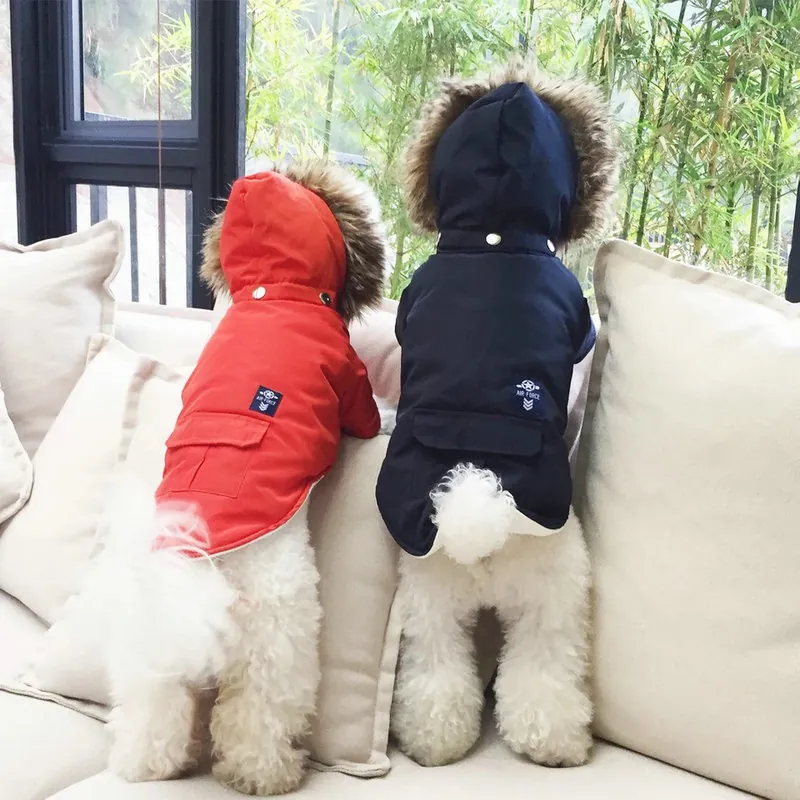 Our pickHooded winter coatCovers the back and neck for snowy outingsfrom $27.99See the product ›Sponsored
For evening walks, a rechargeable light-up harness can be seen from far away and can be worn under or over the coat, depending on the model. Check that the coat has a leash opening if you clip the leash to the harness.
Which one to choose?
- Small or short-haired dog, short outings in snow: lined hooded coat.
- Intense cold, wind, long walks: quilted puffer jacket.
- Cold, dry weather, slightly chilly dog, cool house: knitted sweater.
- Cold rain or slush: raincoat.
- Healthy husky, malamute or thick-coated dog: often nothing, but watch for signs of cold and check the paws.
Frequently asked questions
At what temperature does my dog need a coat?
There is no official number that applies to every dog. A Chihuahua can be cold as soon as it freezes, while a husky is comfortable in deep cold. Go by coat type, size and signs: shivering, slowing down, lifting paws.
Should my dog keep the coat on indoors?
Usually not. According to the PDSA, most dogs do not need one in a heated home and may overheat. Take it off when you come in, especially if it is wet.
Is a sweater enough for a Quebec winter?
For a short outing in dry weather, often yes. For snow, wind or cold rain, a lined coat or puffer protects better, because a wet sweater chills the dog.
My dog refuses to wear a coat. What can I do?
First check the fit, especially behind the front legs. Then get your dog used to it gradually with rewards, a few minutes at a time. Do not force it: if your dog panics, go back a step.
Does my dog need boots as well?
They are not mandatory, but they protect from salt and cold. Otherwise, wipe the paws after every walk. If your dog limps or its pads bleed, see a veterinarian.
Sources
- Cold weather animal safety, AVMA
- Cold Weather and Pets, Canadian Veterinary Medical Association
- Cold Weather Safety Tips, ASPCA
- Vet Q&A: Does my dog need to wear a coat on winter walks?, PDSA
If you have any doubt about your dog's health in cold weather, call your veterinarian.