Litter Box in an Apartment: How to Control Odour
Updated : November 12, 2026
To keep a litter box from smelling in an apartment, scoop at least once a day, empty and wash the box with mild soap every week (or at every litter change), choose an unscented clumping litter and get the waste out in a sealed container. Fragrance does not fix anything: a clean box is what makes the difference.
Here is how to keep the air fresh without bothering your cat, whose sense of smell is far sharper than ours.
Rule number one: scoop every day
The ASPCA, Humane World for Animals and the Cornell Feline Health Center agree: remove feces and urine clumps at least once a day. Twice is even better in a small space, for example morning and evening.
A simple routine makes it easy to remember:
- keep the scoop, bags and waste container right next to the box;
- scoop at a set time, alongside another habit (your morning coffee, your cat's evening meal);
- top up with a little clean litter after each scoop to keep a good depth.
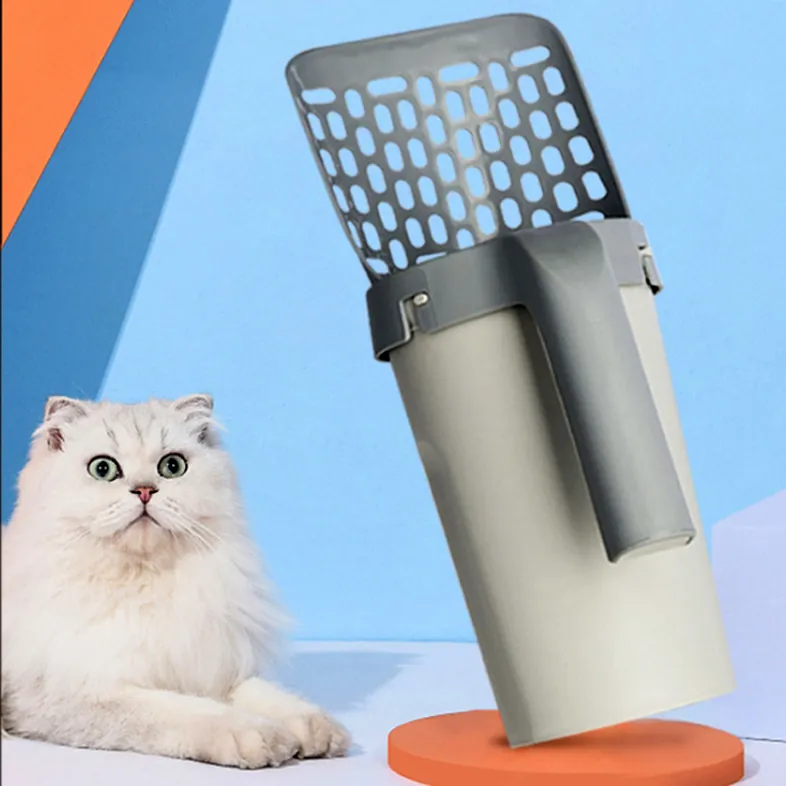 Our pickLitter scoop with bag holderScoop and bags within reach for daily scoopingfrom $28.49See the product ›Sponsored
Our picks
Two products from well-known, highly rated brands to keep your apartment clean day to day.
Wash the box regularly
Scooping is not enough: urine eventually soaks into the plastic. The ASPCA recommends emptying the box completely at least once a week and washing it with mild, unscented soap or a pet-safe enzymatic cleaner. Humane World for Animals offers a guideline by litter type:
- non-clumping clay litter: replace it about twice a week;
- clumping litter: replace it every two to three weeks if you scoop daily, or sooner if the smell comes back or wet clumps stay at the bottom.
Avoid bleach, ammonia and citrus oils: the ASPCA and Humane World for Animals explain that strong smells like these can put a cat off.
Plastic gets scratched over time, and those scratches hold odours. The ASPCA suggests replacing the box about every two years, or sooner if it is badly scratched. The Cornell Feline Health Center also advises replacing a box that is cracked or still smells after washing.
Choosing the right litter
Most cats prefer an unscented, clumping litter with a fine, sand-like texture, according to the ASPCA. The Cornell Feline Health Center also recommends unscented litter.
Why not a scented litter, even in an apartment? Because fragrance hides the smell for us but can be overwhelming for a cat's nose, Humane World for Animals explains. A cat bothered by the smell of its box may go somewhere else, which is far worse for the smell of your apartment.
Clumping litter has a big advantage in a small space: urine forms clumps you remove whole, instead of soaking the entire box.
Depth matters too
The ASPCA recommends about 1 to 2 inches (2.5 to 5 cm) of litter. Too little, and urine reaches the bottom and sticks to the plastic. Too much, and litter spills out and part of it stays dirty longer.
Baking soda
Humane World for Animals notes that a thin layer of baking soda at the bottom of the box can help control odour without bothering your cat. Just a thin layer: the goal is not to add a scent.
Where to put the box in a small home
In an apartment, it is tempting to hide the box as far away as possible. That is a good idea, up to a point. The sources recommend a spot that is:
- quiet and low-traffic, but easy to reach at all times;
- away from your cat's food and water;
- away from noisy appliances such as the washer, dryer or furnace, which can scare a cat at the wrong moment.
A few ideas that work well in an apartment:
- a corner of the bathroom, if the door always stays open;
- the back of a closet with the door removed or kept ajar;
- a corner of a bedroom or hallway, with a litter mat underneath;
Avoid a closed closet or a corner with no airflow: the smell builds up there, and cats do not like feeling cornered.
How many boxes?
The classic rule is one box per cat, plus one, as the ASPCA, Humane World for Animals and the Cornell Feline Health Center all point out. In an apartment with two cats, that means three boxes, which takes a bit of creativity. Even with one cat, the ASPCA notes that a second box can help, since some cats prefer one spot for urine and another for feces.
Covered or open box?
A covered box seems ideal for a small home: it hides the view and keeps litter in. But it has a drawback. The ASPCA explains that most cats prefer an open box and that a lid traps odours inside, right where your cat breathes. Humane World for Animals adds that a covered box can make a cat feel trapped.
If you still choose a covered box, it should be tall enough for your cat to stand up and big enough to turn around easily. And if your cat starts avoiding it, switch to an open one.
Two more tips from the ASPCA: skip plastic liners, which catch on claws, and be careful with self-cleaning boxes that may be too noisy for a nervous cat. Our article Is a self-cleaning litter box worth it? covers the pros and cons.
The waste: the detail people forget
In an apartment, the kitchen garbage fills slowly, and litter waste starts to smell there quickly. A few solutions:
- A sealed litter disposal pail (such as the Litter Genie) that locks each scoop in a continuous bag: keep it next to the box and empty it about once a week.
- Check your city's rules before putting any litter, even plant-based, in the green bin: each municipality has its own guidelines. Do not flush litter down the toilet: it can clog the plumbing.
A litter mat to keep the floor clean
Litter granules that stick to paws end up all over the apartment and carry a little odour with them. A litter mat in front of the box entrance catches most of them. Pick one big enough to cover the exit and easy to shake out or rinse.
When the smell lingers anyway
If the box is clean, the litter is unscented and the smell is still strong, consider:
- an accident elsewhere: a hidden urine stain behind furniture or in a rug can smell more than the box itself. Our article on how to remove dog or cat urine smell explains how to find and treat it;
- a box that is too old, with plastic that has absorbed odour;
- too few boxes for the number of cats.
If your cat changes its habits (going to the box more often, going outside it or avoiding it), talk to your veterinarian to find out why.
Frequently asked questions
How often should I replace all the litter?
With clumping litter scooped daily, about every two to three weeks. With non-clumping clay, about twice a week. Replace it sooner if the smell comes back.
Does scented litter help in an apartment?
Not really. Fragrance hides the smell for us but may bother your cat enough that it avoids the box. Unscented litter, scooped daily, works better.
Can the litter box go in the bathroom?
Yes, if the door always stays open, the spot is quiet and the box is away from the food bowls. Avoid a corner right next to the washer or dryer.
Do I need a covered box to hide the smell?
Not necessarily. A lid keeps the smell inside, where your cat breathes, and many cats prefer an open box. Cleanliness matters more than the model.
Sources
- Addressing Litter Box Problems, ASPCA
- Solving litter box problems, Humane World for Animals
- Feline Behavior Problems: House Soiling, Cornell Feline Health Center