How to Travel by Car With Your Cat: A Complete Guide
Updated : November 13, 2026
To travel by car with your cat, keep it in a hard-sided carrier, secured with a seatbelt on the back seat or placed in the footwell behind a front seat, from the start of the trip to the end. Get your cat used to the carrier and the car several weeks ahead, skip food for a few hours before leaving, and never leave your cat alone in the vehicle. International Cat Care and VCA Animal Hospitals give the same basic advice.
Most cats dislike the car, mainly because they only know it as the ride to the vet. With good preparation, though, a trip for a move, a weekend at the cottage or a family visit can go smoothly. Here is how.
Make the carrier a safe place
The carrier is the key to the whole trip. International Cat Care recommends a sturdy plastic carrier that is easy to clean, with quick-release clips, a secure door, ventilation slots and a removable top. It advises against cardboard boxes and flimsy plastic carriers for long trips, as well as fabric or wicker carriers, which are hard to clean after an accident. Backpack carriers can also be unpleasant for cats, which cannot hide inside and may not get enough air. To compare models, see our guide on how to choose a cat carrier.
Next, your cat has to want to go in. VCA suggests leaving the carrier open at home all the time, so it becomes just another resting spot. International Cat Care suggests adding a cozy bed, a blanket that smells like home and a few treats, then letting your cat go in, come out and sleep there freely. VCA even suggests feeding meals in the carrier.
Once your cat walks in without hesitation, close the door for a moment, carry the carrier around the house, then open it and reward. International Cat Care also mentions synthetic feline pheromone sprays on the bedding: if you use one, wait 15 to 20 minutes before putting your cat in, because the spray smells of alcohol at first.
Our picks
Two items from well-known brands, highly rated, for a more comfortable car trip.
Get your cat used to the car, one step at a time
VCA describes a simple progression, spread over several days or weeks:
1. Bring the carrier, with your cat inside, into the parked car. Stay a few minutes, then go back inside and reward.
2. Repeat, this time starting the engine without driving.
3. Drive once around the block, then go home and reward.
4. Gradually make the drives longer.
The earlier you start, the easier it is. VCA notes that starting with a kitten is ideal, but the same steps work for adult cats. A cat that takes short, pleasant rides, not just trips to the clinic, will link the car with stress less often.
Secure the carrier in the car
International Cat Care is firm: the carrier must be secured so it cannot move during sudden braking, and it must stay well ventilated. Two good spots:
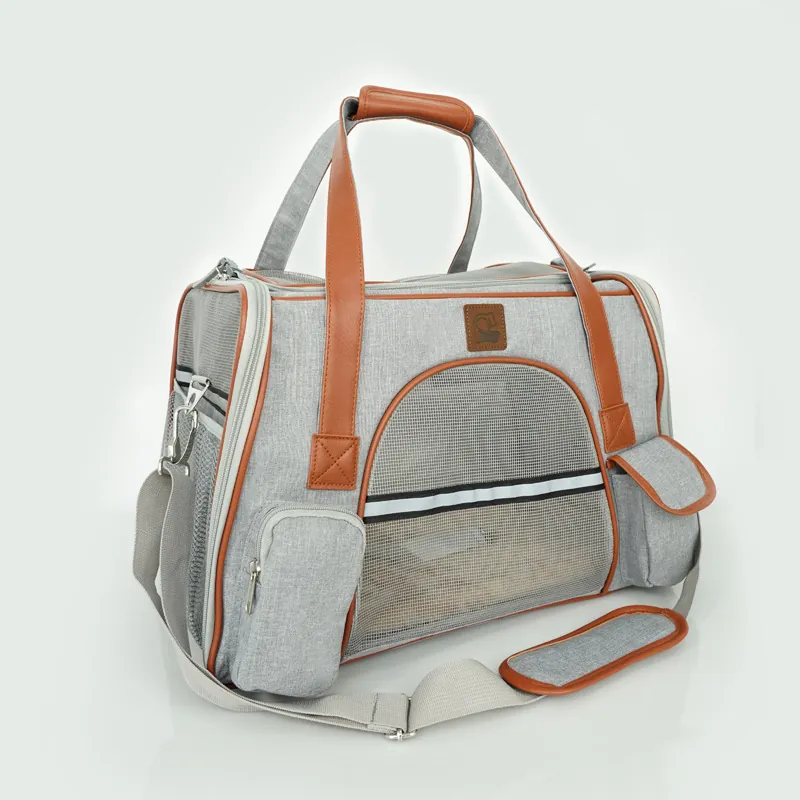 Our pickVentilated pet carrier with cushionVentilated, with a cushionfrom $50.99See the product ›Sponsored
- on the back seat, held in place with the seatbelt;
- in the footwell behind a front seat, wedged so it cannot slide.
Never put the carrier in the trunk. International Cat Care also warns about the back of hatchbacks, where air circulates poorly and cats can overheat.
Keep your cat in the carrier for the whole drive, even if it meows. A loose cat can distract the driver, get stuck under the pedals or escape through an open door or window. Talk to your cat calmly: according to International Cat Care, the motion and engine noise often end up putting cats to sleep. If you must take your cat out, VCA recommends a well-fitted harness and leash it cannot slip out of.
Food, water and litter
Before you leave
International Cat Care advises holding back food for about four to five hours before departure, in case your cat gets queasy. VCA suggests skipping breakfast on travel day and offering a small meal in the evening once you arrive. Water stays available until you leave.
During the drive
Offer water at stops. International Cat Care mentions bowls that clip onto the carrier door and can be refilled without opening it. VCA recommends bringing water from home and your cat's usual unbreakable bowls.
Little accidents
Line the bottom of the carrier with an absorbent pad, and bring a spare blanket that smells like home. A carrier with a solid base helps a lot if your cat urinates. For a long drive, VCA recommends bringing some of your cat's usual litter, a small box (a plastic dishpan works), a scoop, bags, paper towels and disposable gloves. International Cat Care cautions that most cats will not use the box during the drive, so plan it mainly for long stops and your arrival.
Heat, cold and stops
Never leave your cat alone in the car, even for a few minutes. VCA and International Cat Care point out that the inside of a car heats up very quickly and that a cracked window in the shade is not enough: heatstroke can be fatal. During a stop, someone stays with the cat, which remains in its carrier with the doors or windows open for airflow.
A Quebec winter brings the opposite problem. International Cat Care recommends a carrier that keeps your cat warm and out of drafts while still letting air flow. Warm up the car before putting your cat in. In any season, International Cat Care also suggests covering the carrier with a light blanket to reduce stress, without blocking the vents.
What to pack for a long drive
Based on advice from VCA and International Cat Care:
- the carrier, with an absorbent pad and a blanket that smells like home;
- water from home, your cat's bowls and usual food in small portions;
- a small litter box, some of its litter, a scoop and bags;
- paper towels, zip-top bags and disposable gloves;
- a harness and leash;
- an ID tag with the phone number of where you are going (VCA also suggests a microchip);
- vaccination records and any medication your cat takes.
If you are staying at a hotel or cottage, check ahead that cats are allowed, VCA advises. When you arrive, settle your cat in one quiet room first, with its litter box, bowls and open carrier, just as you would after an adoption.
What if the trip is not a good idea?
For a short absence, a cat is often happier at home. A cat boarding facility or a sitter who comes to your home may be better than a long drive. If your cat has been sick or very anxious in the car before, International Cat Care and VCA recommend talking to your veterinarian before you leave: only your vet can advise on what suits your cat.
Frequently asked questions
My cat meows nonstop in the car: what should I do?
That is common at first. Keep your cat in the carrier, talk calmly and do not take it out. The car's motion and noise often settle cats down. Short, regular drives help in the long run.
Can my cat ride loose in the car?
No. A loose cat can distract the driver, slip under the pedals or bolt when a door opens. It stays in its secured carrier for the whole trip.
Do I need a litter box for a drive of a few hours?
For a short trip, an absorbent pad in the carrier is enough. For a long drive, bring a small box and litter for stops and your arrival, even though most cats do not use it on the road.
Where should the carrier go in the car?
On the back seat, held by the seatbelt, or in the footwell behind a front seat. Never in the trunk.
Sources
- Travelling with your cat, International Cat Care
- Road Trips and Car Travel With Your Cat, VCA Animal Hospitals
- Moving house with your cat, International Cat Care