Small Dog Carrier Bag: How to Choose the Right One
Updated : November 11, 2026
To choose a carrier bag for a small dog, measure your dog first and add a few centimetres: your dog should be able to stand up, turn around and lie down inside. Then pick the style for how you'll use it: a soft-sided bag with mesh for the car, bus or plane, a backpack for walks and hikes, a sling for short outings, a rolling carrier for long walks through a station or airport. Finally, check the airflow, how solid the closures are and whether the pad is washable. These are the criteria the American Kennel Club (AKC) highlights.
Here is how to measure your dog, the different types of carriers, the details that make a difference and how to get your dog used to its bag.
Why use a carrier bag for a small dog?
A small dog can walk, of course. But a carrier is useful in many situations:
- trips to the vet or the groomer, especially when there are other animals in the waiting room;
- public transit and flights: many carriers require a small pet to stay in a closed bag (rules vary from one transit network or airline to another, so always check the carrier's website before you go);
- crowds: a market, a festival or a busy street where your dog could get stepped on;
- a senior or tired dog who can no longer keep up for the whole walk;
- hiking, for the tricky sections or the end of the trail.
The AKC points out that a bag keeps a small dog close to you and away from passers-by's feet. That is often more reassuring for the dog than being on the ground in the middle of a crowd.
Our picks
Two carriers from well-known brands, highly rated by buyers, for two different uses.
How to measure your dog
This is the most important step. The AKC suggests two measurements:
1. Back length: from the base of the neck (where the collar sits) to the base of the tail.
2. Shoulder height: from the ground to the top of the shoulder.
Add a few centimetres to each. Your dog should be able to stand, turn around and stretch out lying down. The AKC gives a telling example: a 23 cm (9 in) tall Dachshund would be cramped in a 23 cm carrier; it needs one at least 30 cm (12 in) tall.
Weight matters too. Every carrier has a weight limit set by the manufacturer: stick to it. A bag that is too small or overloaded wears out faster, and your dog will be uncomfortable. Think about your comfort as well: carrying a 7 kg bag on one shoulder for an hour is noticeable.
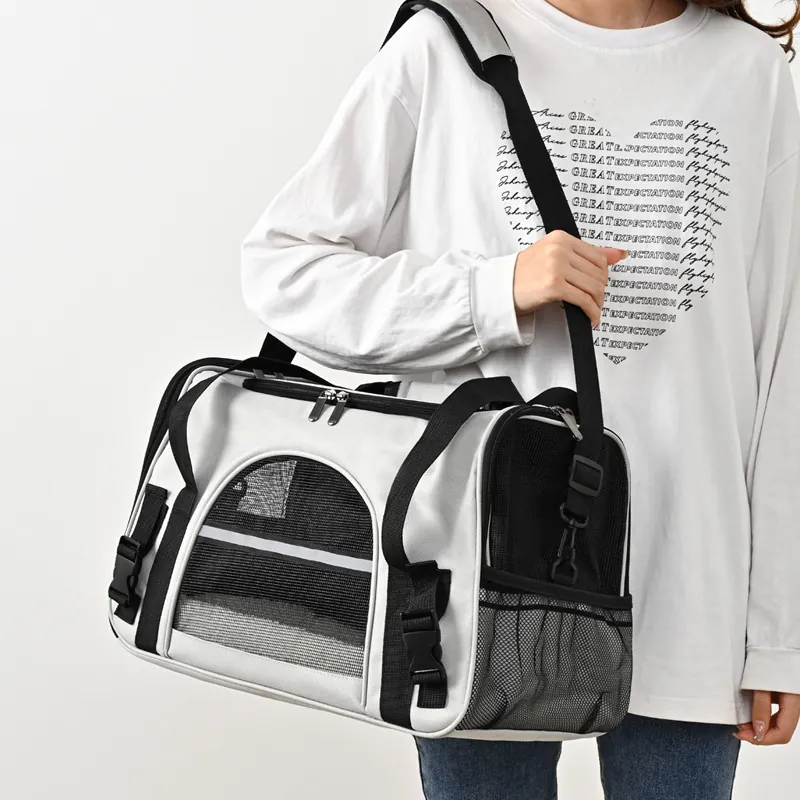 Our pickSoft shoulder pet carrierSoft, with a shoulder strapfrom $31.99See the product ›Sponsored
If you can, try the carrier in a store with your dog. Otherwise, keep the box and receipt until you are sure the size works.
Types of carriers
Soft-sided bags
The most popular choice for small dogs. They are light, often have mesh panels for air and a view, and sometimes have sides that expand to give more room once you arrive. Many models have a strap to attach to the car's seat belt or to a suitcase handle. They are the logical choice for planes, buses and vet visits.
Backpacks and front packs
They free your hands. A backpack is worn on your back, a front pack on your chest, often with openings for the legs and head. According to the AKC, they are mostly meant for puppies and small dogs and are great for walking or hiking. Your dog sees the scenery and you keep your balance.
Slings
Light and often washable, a sling is worn across the body. It's handy for a short outing or for a tiny dog who loves to be held close. Over long distances, it tires your shoulder more than a backpack.
Rolling carriers
Wheels keep the dog steadier in busy places like an airport or train station, which may make it less anxious. The AKC notes that spinner wheels are easier to steer than in-line wheels. A good choice for a slightly heavier dog or for long walks.
What about a hard-sided carrier?
A hard-sided carrier stands up better to bumps and crushing, for example in an aircraft hold or between suitcases. It is less convenient to carry. If you're unsure, read our guide on choosing a cat carrier: the same criteria apply to small dogs.
The details that make a difference
- Airflow: mesh panels on at least two sides. The AKC reminds owners that air must circulate, even in an air-conditioned car or cabin, so the dog doesn't overheat.
- Several openings: one on top and one on the side make it much easier to get your dog in and out.
- Closures: check the zippers, Velcro and buckles. A clever little dog can nudge a zipper open with its nose. Some bags have lockable zippers.
- An inside tether: a small clip attached to the harness (never the collar) keeps the dog from leaping out when you open the bag.
- The pad: removable and washable. Car sickness and accidents happen.
- Pockets: for the leash, poop bags, a collapsible bowl and paperwork.
- Reflective strips: useful in winter, when it's dark by 4:30 p.m.
Car travel with a small dog
A small dog should not ride loose in the car or on the driver's lap. VCA Animal Hospitals recommends that dogs be properly restrained during travel, for example in a crate or carrier secured on the back seat. A few more tips from VCA:
- get your dog used to the carrier at home, for example by feeding a few treats inside;
- put a leash or harness on your dog before opening the car door: even a calm dog may bolt in an unfamiliar place;
- offer water at every stop;
- never leave your dog alone in the car, even for a few minutes, summer or winter.
Getting your dog used to its carrier
A carrier bought the day before a trip is a recipe for a reluctant dog. The AKC recommends buying it well in advance and taking it slowly:
1. Leave the bag open in a quiet room, with a blanket that smells like home.
2. Toss a treat or toy inside and let your dog go get it.
3. Reward every time your dog goes in on its own.
4. Close the bag for a few seconds, then a few minutes, while staying close.
5. Pick it up and walk around the house, then around the block.
6. Watch your dog: if it pants, trembles or scratches to get out, go back a step.
With patience, most small dogs end up liking their carrier. Some even curl up in it for a nap.
Frequently asked questions
What size carrier does my small dog need?
Measure the back length (from the collar to the base of the tail) and the shoulder height, then add a few centimetres. Your dog should be able to stand, turn around and lie down. Also check the manufacturer's weight limit.
Can my dog ride the bus or fly in a carrier?
Often yes, but rules vary by carrier: bag size, dog's weight, fees, booking. Always check the current rules on the transit network's or airline's website before you leave.
Is a backpack comfortable for a dog?
Yes, if it's the right size and the dog is used to it. Your dog should be able to sit on the bottom pad without being squeezed. Take breaks so it can walk and relieve itself.
My dog refuses to get in its carrier. What should I do?
Go back to the first steps: carrier open at home, familiar blanket, treats inside, no pressure. If your dog stays very anxious, a dog trainer can help.
Sources
- How to Choose the Best Dog Carrier, American Kennel Club
- Transporting Your Small Dog, American Kennel Club
- Road Trips and Car Travel With Your Dog, VCA Animal Hospitals