How to Bathe Your Dog at Home
Updated : November 11, 2026
To bathe your dog at home, brush first, wet the coat down to the skin with lukewarm water, use a shampoo made for dogs (never one for people), rinse until no lather is left, then dry thoroughly and keep your dog warm until completely dry. With a little preparation, a bath takes about twenty minutes and can be a good moment for both of you.
Here is how often to bathe, what to prepare, the step-by-step method and our drying tips, which matter a lot in winter.
How often should you bathe your dog?
There is no single rule: it depends on the coat and lifestyle.
- Most dogs need a bath only occasionally, when the coat is dirty or a "doggy odour" sets in, according to VCA Animal Hospitals.
- Non-shedding dogs (poodles, bichons, shih tzus, for example) are often bathed about every six to eight weeks, usually along with a haircut.
- Dogs with a thick undercoat (huskies, shepherds, golden retrievers) benefit from a bath in spring and autumn during shedding, but mostly need regular brushing.
- Dogs with oily coats may need baths more often.
The American Kennel Club (AKC) notes that with a gentle shampoo, a bath as often as once a week will not dry out the coat, but it is best to skip unnecessary baths to preserve the skin's natural oils. Between baths, brushing removes much of the dirt and dead hair.
Our picks
Three tools from well-known brands, well rated, that make bath time faster and less messy.
Which shampoo should you use?
Always a dog shampoo. Dog skin differs from ours in thickness and pH: VCA explains that human shampoos, even baby shampoo, are far too harsh for it. For routine baths, VCA recommends a hypoallergenic shampoo with no added fragrance.
A dog conditioner is optional. It helps detangle long coats and makes brushing easier, as long as you rinse it out well. If your vet has prescribed a particular shampoo, follow their instructions, especially on how long to leave it on.
What to get ready
Gather everything before you start: a wet dog should not be left alone while you go looking for a towel. The AKC's list:
- a dog shampoo;
- a rubber bath brush or a washcloth;
- several towels;
- cotton balls for the ears;
- a bathtub, shower or large basin (a sink is enough for a small dog);
- a detachable shower sprayer or, failing that, a large pitcher;
- treats for rewards;
- clothes you do not mind getting wet.
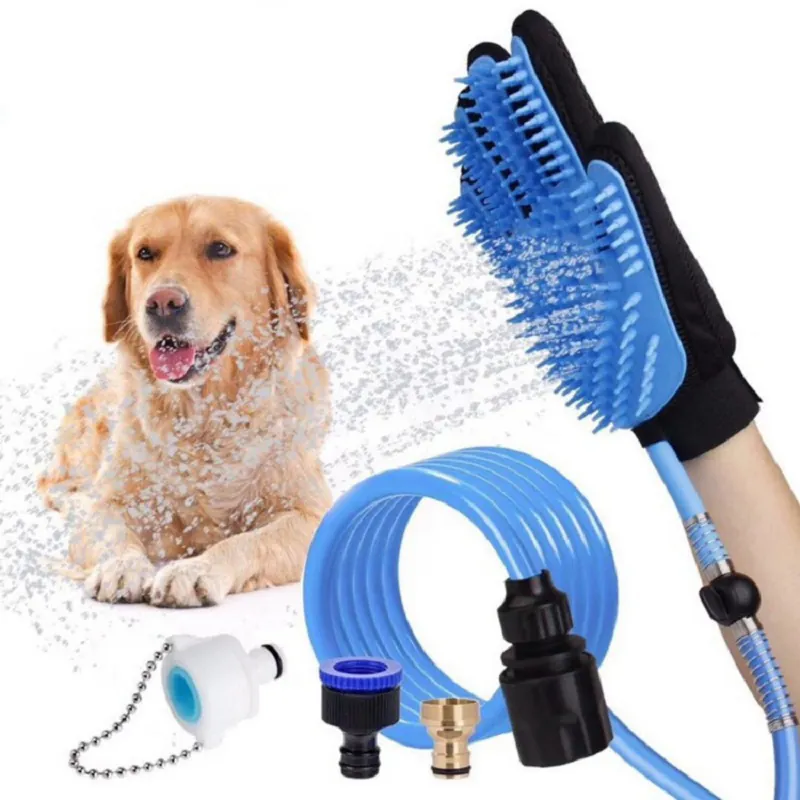 Our pickBath glove with built-in sprayerWater flows through the glove: one hand washes, the other holdsfrom $26.99See the product ›Sponsored
Put a non-slip mat in the bottom of the tub: a dog that slips panics more easily. Use a drain screen to catch hair.
Step 1: brush before the bath
This is the step everyone forgets, yet it matters most. Mats tighten when wet and can become impossible to untangle, warn both the AKC and VCA. A good brushing also removes dead hair, which helps water and shampoo reach the skin and keeps the drain from clogging. To choose the right tool, see our guide What is the best brush for a dog that sheds a lot?.
Step 2: wet with lukewarm water
The water should be lukewarm, never hot. Test it on the inside of your wrist, as you would for a baby. The AKC suggests filling the tub to about the dog's knees. Wet the coat down to the skin, starting with the back and legs. With a thick coat, take your time: water takes longer to get through the undercoat.
Gently place a cotton ball at the entrance of each ear to keep water out (and remember to remove them afterwards).
Step 3: lather
Work the shampoo into a lather, massaging down to the skin. On a long coat, lather in the direction the hair grows to avoid tangles. Do not forget the hidden spots: belly, under the tail, legs, between the pads, under the neck and around the ears.
For the head, keep water and soap away from the eyes and the inside of the ears. Many owners wash the face separately with a damp washcloth.
Step 4: rinse, rinse and rinse again
Shampoo residue can irritate the skin and leave the coat dull. Rinse with lukewarm water, starting at the head and working down, until the water runs perfectly clear and the coat no longer feels slippery. On a thick coat, rinsing often takes twice as long as lathering.
Step 5: dry, especially in winter
Step back: your dog will almost certainly shake! Let it, because that removes a lot of water. Then:
- Towel off by rubbing vigorously. A microfibre towel absorbs far more than a cotton one.
- A dryer is fine on a warm or cool setting, never hot, held at least a foot (30 cm) from the skin, according to the AKC. Dryers designed for dogs are gentler. Get your dog used to the noise gradually.
- Brush while drying to detangle and keep the coat from drying in clumps.
- Keep your dog warm until fully dry, the AKC advises. In Quebec, from October to April, this is essential: a dog with a thick undercoat can stay damp near the skin for hours. Plan the bath for early evening rather than right before a walk, and wait until your dog is dry before going out.
Making bath time pleasant
The AKC recommends making the bath a positive experience, especially with a puppy: praise, a toy and a treat afterwards. A few tips:
- Start young with "dry runs": the puppy steps into the dry tub, gets a treat and steps out.
- Keep your voice calm and your movements slow.
- A lick mat spread with xylitol-free peanut butter and stuck to the tub wall keeps many dogs busy during the wash.
- Tire your dog out first with a good walk.
- For a large dog, a shower sprayer or an outdoor bath in summer (with lukewarm water) makes things much easier.
When to call a groomer
Some dogs are too big, too hairy or too stressed for a bath at home. A matted coat, a haircut that is due or a dog that panics are good reasons to hand the job to a professional. Groomers have raised tubs, powerful dryers and experience with nervous dogs. If your dog is anxious, read How to calm an anxious dog at the groomer. Many mobile groomers even come to your home with an equipped van.
Frequently asked questions
Can I use my own shampoo or baby shampoo?
No. According to VCA, human shampoos, even baby shampoo, are too harsh for dog skin, which has a different pH. Always use a shampoo made for dogs.
How old does a puppy need to be for a bath?
Ask your vet when to start with your puppy. In the meantime, a damp washcloth is enough for small messes. The first real bath should use a puppy shampoo, lukewarm water and a thorough dry.
Why does my dog still smell after a bath?
Often because the coat is not dry down to the skin or the shampoo was not fully rinsed. Dry longer and rinse more. If the smell persists, talk to your vet.
Can I bathe my dog in winter?
Yes, indoors, with lukewarm water, drying your dog completely before going outside. Evening is a good time, since your dog has the whole night to finish drying somewhere warm.
Sources
- Bathing Your Dog Needn't Be a Chore, American Kennel Club
- It's Bath Time: Towels, Brushes, Dog Shampoo, and More, American Kennel Club
- Grooming and Coat Care for Your Dog, VCA Animal Hospitals