Is a Cat Water Fountain Worth It?
Updated : November 9, 2026
Yes, a water fountain can help a cat that drinks little, but it is not magic. According to the Cornell Feline Health Center, some cats drink more from running water while others show no difference. A fountain works best alongside other good habits: fresh water at all times, bowls in the right places and, if possible, some wet food.
Here is how much water a cat needs, why some cats drink so little, how to choose a fountain and how to keep it clean.
How much water does a cat need?
The Cornell Feline Health Center and VCA Animal Hospitals give the same guide: about 4 ounces (120 ml) of water per 5 pounds (2.3 kg) of body weight per day. A 10-pound (4.5 kg) cat needs about one cup (240 ml) a day.
That total includes the water in food. Wet food can be up to 80% water, according to Cornell, so a cat eating mostly wet food drinks much less from the bowl, and that is normal. A cat on dry food has to get almost all its water by drinking.
Needs also vary with temperature, weight, activity and health.
Our picks
Well-known brands widely sold in Canada. Check the reservoir size and the cost of replacement filters before choosing.
Why some cats drink so little
Cats have a weak sense of thirst and can be picky. Several details can put them off:
- Stale water that has been sitting for a long time or tastes of the bowl.
- A narrow bowl: many cats dislike their whiskers touching the rim. VCA suggests filling the bowl to the top or choosing a wide, shallow one.
- A plastic bowl, which can hold odours. VCA notes cats generally prefer glass, metal or ceramic.
- A poor location: too close to the litter box, or in a busy, noisy spot.
- Conflict with another cat that guards the bowl.
Cornell also lists medical causes: a weak cat, one with a poor appetite or dental pain may drink less.
What a fountain offers
A fountain keeps water moving and runs it through a filter. Many cats find moving water more appealing, which is why so many love drinking from the tap. VCA lists a filtered fountain among its tips to help cats drink.
Pros: water that stays fresh longer, a filter that catches hair and debris, and a larger reservoir. Cons: it must be cleaned regularly or it becomes worse than a bowl, filters cost a little every month, and some cats are scared of the pump noise.
How to choose a fountain
Material
Stainless steel or ceramic fountains are easier to keep clean and hold fewer odours than plastic. Plastic fountains are cheaper and lighter; if you choose one, wash it often.
Noise
A quiet pump matters, especially in a bedroom or for a timid cat. Read buyer comments about noise before you buy.
Easy cleaning
Choose a model that comes apart easily, ideally with dishwasher-safe parts. The easier it is to clean, the more often you will do it.
Capacity
About 1.5 to 2 litres is enough for one cat. For several cats, go bigger and still keep one or two regular bowls elsewhere in the home.
Flow style
Some fountains have a flower-shaped jet, others a small waterfall or a gently flowing surface. There is no single right choice: watch how your cat drinks from the tap or bowl.
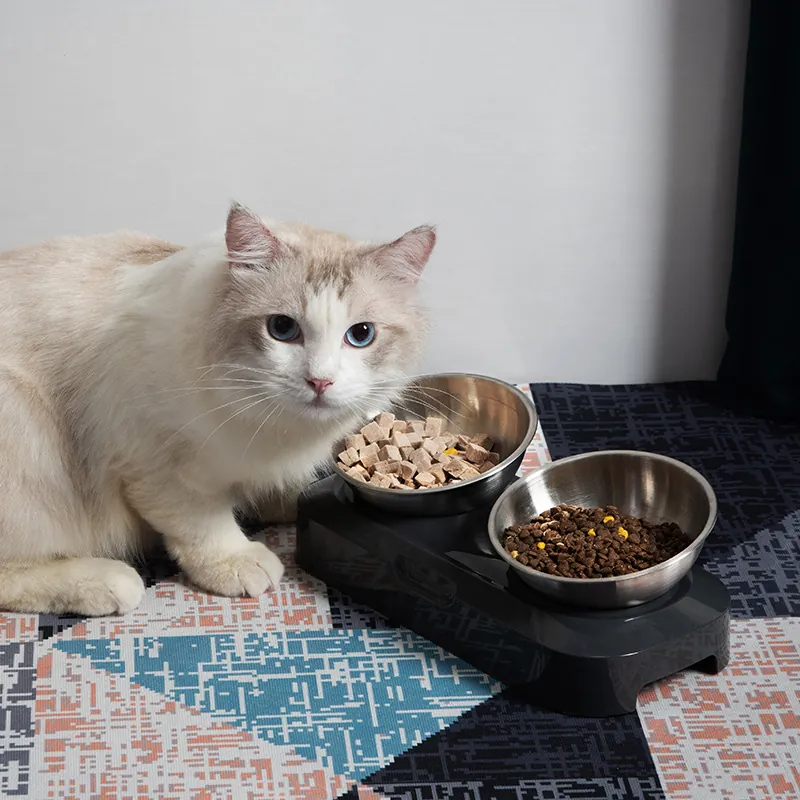 Our pickSingle or double tilted steel bowl on a standTilted stainless bowl on a standfrom $21.99See the product ›Sponsored
Helping your cat accept the fountain
1. Set it next to the old bowl without removing the bowl right away.
2. Leave it off for a day or two if your cat is timid, then switch it on.
3. Place it somewhere quiet, away from the litter box.
4. Keep other water stations: VCA recommends several bowls around the home.
If your cat still prefers its bowl, that is fine: what matters is that it drinks.
Cleaning: do not skip it
A neglected fountain builds up biofilm, hair and bacteria. VCA recommends cleaning the filter weekly, or as the manufacturer directs. In practice:
- Add fresh water every day or two.
- Take the fountain apart and wash it, pump included, about once a week with hot water and mild soap, then rinse well.
- Replace the filter as directed.
- Check the water level often: a pump that runs dry can be damaged.
Other ways to help your cat drink
- Add wet food, or a little water to kibble, increasing gradually.
- Wash bowls daily and change the water often.
- Try different temperatures: some cats like cold water, others room temperature.
- Offer several wide, shallow bowls in ceramic, glass or metal.
- VCA also mentions a little low-sodium, unseasoned chicken broth in the water, changed daily. Never use broth with onion or garlic, which are toxic to cats.
When to call the vet
A cat that suddenly drinks much more than usual should see a vet. A cat that barely drinks, seems weak, eats little or has dry gums may be dehydrated. In either case, call your veterinarian.
Frequently asked questions
Can a fountain replace wet food?
No. Wet food brings a lot of water with each meal. A fountain is a complement, most useful for cats on dry food.
My cat is afraid of the fountain. What can I do?
Leave it switched off next to the usual bowl for a few days, then turn it on. A quieter model or gentler flow may also help.
Do I need filtered water?
Tap water suits most cats. The fountain filter mainly catches hair and debris.
How often should I clean the fountain?
About once a week for a full clean, with fresh water added every day or two and the filter changed as the manufacturer directs.
Sources
- How To Get Your Cat To Drink More Water, VCA Animal Hospitals
- Hydration, Cornell Feline Health Center
- Chronic kidney disease (CKD) in cats, International Cat Care
If your cat suddenly drinks much more or much less, see your veterinarian.